
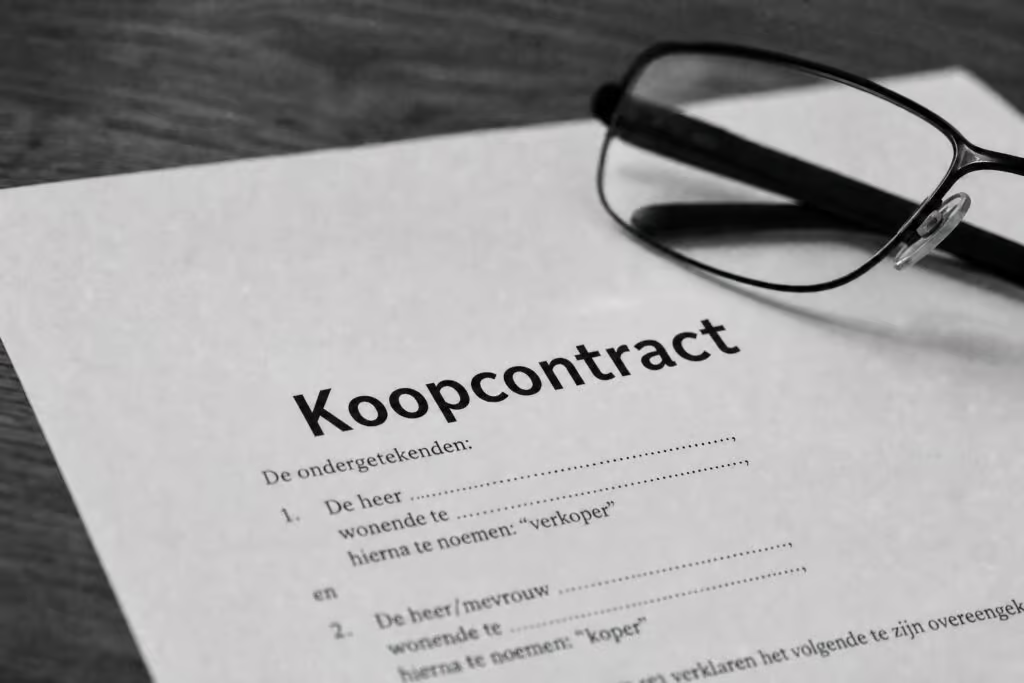
The voorlopig koopcontract is the legally binding preliminary purchase agreement used in Dutch residential real estate transactions, signed by buyer and seller after bid acceptance, setting the price, transfer date and all resolutive conditions, with a statutory three-day cooling-off period for the buyer.
The word ‘preliminary’ is misleading. The voorlopig koopcontract is not a letter of intent. It is not an informal agreement. The moment both parties sign it, you are legally committed to buy the property at the agreed price, on the agreed date, under the agreed conditions. Understanding every clause before you sign is not optional, and for expats it can be the difference between a smooth purchase and an expensive lesson in Dutch contract law.
Purchase Contract for a House in Amsterdam vs. Outside Amsterdam: What's the Difference?
When buying a home in Amsterdam, the purchase process differs significantly from the rest of the Netherlands. In Amsterdam, the purchase agreement is standardly drawn up by a notary, a practice known as the Amsterdam RING model. Outside Amsterdam, it is customary for the selling real estate agent to draft the purchase contract.
The notary is involved because, as an impartial third party, they have a thorough overview of all legal issues related to the transaction, allowing potential problems to be addressed before the purchase agreement is signed. Furthermore, Amsterdam notaries do not use the standard NVM purchase agreement, but instead work with a model specifically developed by and for the Amsterdam notarial circle and the two models can play out quite differently in practice. This affects clauses around guarantees, penalty provisions, and hidden defects. Amsterdam notaries are also better versed in specific legal matters such as ground lease (erfpacht), which is far more common in Amsterdam than anywhere else in the country.
What the Contract Contains
The standard koopcontract (which most transactions use) covers: the agreed purchase price; the transfer date (leveringsdatum); the deposit or bank guarantee requirement (usually 10 percent of the purchase price); the specific resolutive conditions (ontbindende voorwaarden) agreed during negotiation; and any specific agreements about fixtures, fittings or work to be done before transfer.
The resolutive conditions section is the most important part for buyers. Each condition gives you a legal exit route if the specified event occurs within the agreed period. Without the right conditions, you may be locked in even if your financing falls through or a structural problem is discovered.
Mr. Broker reviews every koopcontract before our clients sign. This is not a formality: we catch issues that sellers’ agents include (intentionally or not) that are not in the buyer’s interest. For expats the koopcontract is in Dutch, and our team explains every clause in English line by line. This is part of the standard service described on what we do.
The Two Most Important Resolutive Conditions
Financieringsvoorbehoud (financing condition): If your mortgage is not approved, you can invoke this condition and exit the contract within the agreed period without financial penalty. Typically three to six weeks. Always include this unless you are buying in cash, and especially when your mortgage is based on an expat contract or the 30% ruling, where approval can take longer than a standard Dutch salary file.
Bouwkundige keuring (structural survey condition): If a certified structural survey reveals defects above an agreed cost threshold (usually €5,000 to €15,000 depending on negotiation), you can exit the contract. Always include this for pre-war properties. For newer buildings it is still advisable.
What Happens If You Sign and Then Want Out
Once the three-day cooling-off period has passed and no resolutive condition applies, withdrawing from the koopcontract means paying the seller a penalty equivalent to 10 percent of the purchase price. On a €450,000 apartment, that is €45,000. This is why you need a buying agent reviewing the contract before you sign it.
The FAQ covers the full cost picture of buying in Amsterdam. And if you are approaching the contract stage and want Mr. Broker to review the document with you, get in touch.
Do I need to be in the Netherlands to sign the koopcontract?
No. The koopcontract can be signed digitally, which is convenient for expats who are still based abroad or who travel for work. Mr. Broker arranges this remotely and coordinates with the notary. For the final transfer (leveringsakte) you either attend in person or sign a power of attorney (volmacht) so the notary can complete the transfer on your behalf.
Is the voorlopig koopcontract really legally binding?
Yes. Despite the word ‘preliminary’, it is a legally binding contract under Dutch law from the moment both parties have signed it. The three-day cooling-off period for buyers is the only no-penalty exit after signing, unless a resolutive condition applies.
Can I negotiate the terms of the koopcontract?
Yes, within limits. The conditions (especially resolutive conditions), the transfer date, the inclusion or exclusion of specific items, and sometimes the penalty percentage are all negotiable. What you cannot change are the statutory obligations under Dutch property law. This is an area where a buying agent adds direct value.
What is the three-day cooling-off period exactly?
After the buyer receives a signed koopcontract, you have three calendar days (not business days; weekends count) to withdraw without penalty. This period protects buyers from impulse decisions. After three days, the conditions in the contract are the only exit route.
What happens to the deposit if I withdraw with a valid resolutive condition?
If you invoke a resolutive condition within the agreed period with proper documentation, you are entitled to a full refund of any deposit paid. The condition must be invoked correctly: in writing, within the deadline, with supporting evidence. Mr. Broker manages this process for our clients.
The koopcontract is where deals are made or broken. Having Mr. Broker read it before you sign costs nothing extra and protects everything. Book a free intake.