
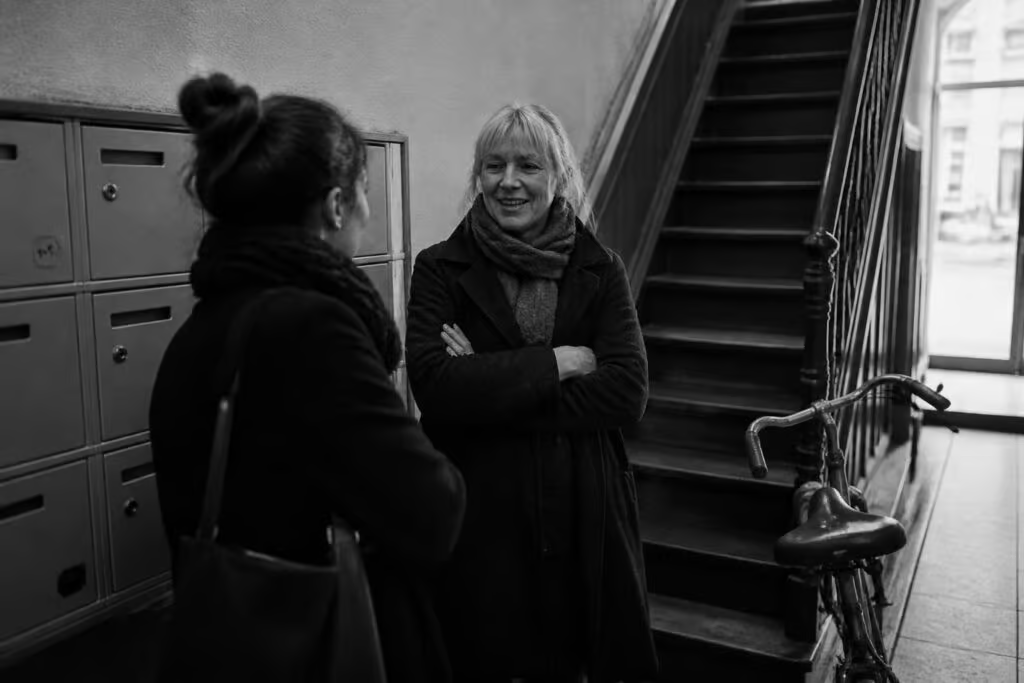
A VvE (Vereniging van Eigenaren) is the mandatory homeowners association that every apartment owner in the Netherlands becomes a member of upon purchase, responsible for managing shared building elements including the roof, facade, staircases and communal installations, funded by monthly service charges and a collective reserve fund.
You found an apartment you like. The price is right. Then your buying agent asks: have you seen the VvE documents? You realise you do not know what a VvE is. By the time you sign the koopcontract, you will be a legally committed member of one. For expats this is one of the most underestimated parts of the Dutch buying process: the VvE documents are all in Dutch, and most international buyers never see them translated. Here is what you need to know before that happens.
What the VvE Does
The VvE manages everything that is shared between apartment owners in the same building: the roof, external facade, entrance hall, staircase, shared mechanical and electrical systems, and any communal outdoor space. Individual owners manage their own apartment interior; the VvE manages the rest.
Decisions are made collectively at the annual or extraordinary general meeting (vergadering). Each owner has voting rights proportional to their ownership share (breukdeel). Major expenses (a new roof, facade restoration, lift replacement) are voted on and funded from the reserve fund.
Mr. Broker checks VvE health as standard before recommending a bid. A building with an underfunded VvE and a failing roof is a liability, not an asset. For expat buyers our team translates the relevant VvE documents from Dutch into English so you understand what you are committing to. This is part of the due diligence described on what we do.
How to Spot a Healthy VvE
Three documents tell you almost everything: the last two years of meeting minutes (vergadernotulen), the most recent annual accounts (jaarrekening), and the long-term maintenance plan (MJOP, meerjaren onderhoudsplan).
A healthy VvE has: a reserve fund with at least the level recommended by the MJOP; an active, meeting MJOP; and meeting minutes that show regular engagement. Red flags: no reserve fund, overdue maintenance items, disputes between owners, and a VvE that has not met in two years.
What You Pay and What You Get
Every apartment owner pays a monthly VvE contribution (servicekosten or VvE-bijdrage). Part of this goes to the reserve fund for future maintenance; part may cover current operational costs like building insurance or caretaker fees. Typical amounts range from €100 to €500 per month depending on building size and condition.
When you buy an apartment, you are buying into the VvE’s financial position, including any liabilities. A VvE with a major planned expenditure and no reserve fund means a special assessment is coming: all owners pay a lump sum to cover the cost. This can easily run to €10,000 to €30,000 per owner. For expats this is often the biggest hidden cost shock: it does not show up in the asking price or on Funda, only in the VvE documents.
The FAQ covers all the costs associated with buying in Amsterdam. If you have specific questions about a VvE document you have received, get in touch.
Frequently asked questions about VvE in the Netherlands
Are VvE documents available in English?
Almost never. VvE minutes, accounts and the MJOP are produced in Dutch, since most members and the board operate in Dutch. For expat buyers this is a real problem: you are about to commit to a financial body whose books you cannot read. Mr. Broker translates the relevant sections into English before the bid, and flags any financial or maintenance issues you would otherwise miss.
Is joining a VvE mandatory when buying an apartment?
Yes. When you buy an apartment in a building with shared elements (which covers virtually all Amsterdam apartments) you automatically become a member of the VvE. This is a legal obligation, not a choice.
Can the VvE make decisions I disagree with?
Yes, by majority vote. As a member, you have the right to attend meetings, vote, and raise agenda items. But the majority governs. This is why understanding the health and culture of the VvE before you buy is important: you are joining a collective, not just buying an apartment.
What if the VvE is not active or does not meet?
An inactive VvE is a significant red flag. It often means maintenance is being deferred, reserve fund contributions are not being collected, and the building is deteriorating. It can also make selling the apartment harder, as mortgage lenders and future buyers will scrutinise VvE health.
What is a splitsingsakte?
The splitsingsakte is the legal document that established the apartment rights (appartementsrechten) and defined the ownership shares and common areas when the building was split into separate apartments. It defines your breukdeel (ownership fraction) and determines your voting weight in the VvE.
The VvE is one of the most important, and most overlooked, aspects of buying an Amsterdam apartment. Talk to Mr. Broker before you bid, not after you sign.