
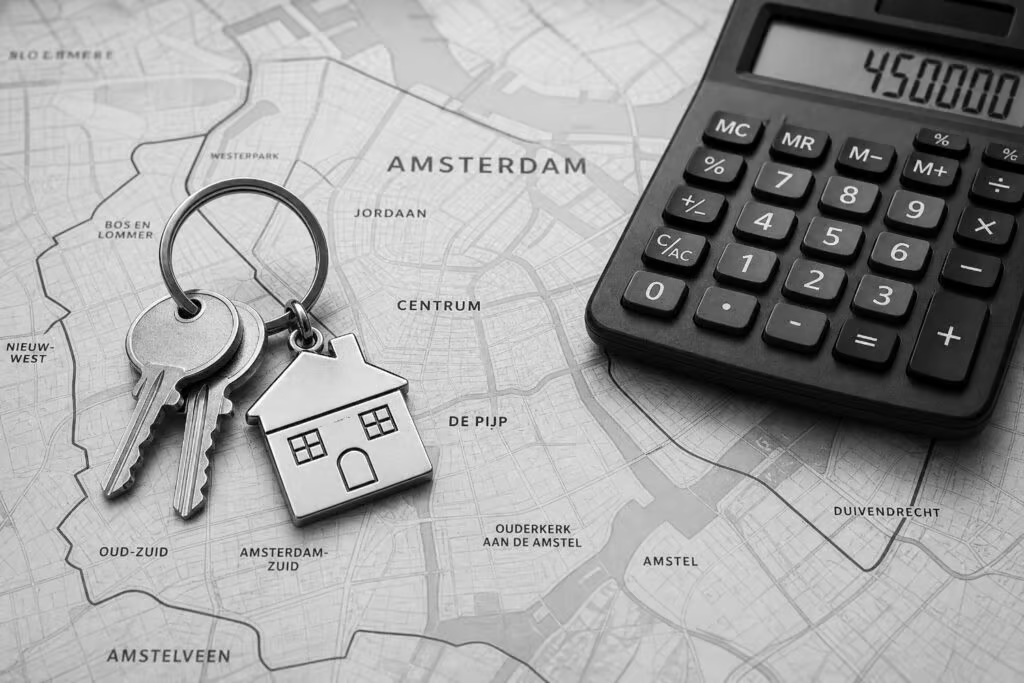
Expats in the Netherlands can qualify for a Dutch mortgage of up to 100% of the property’s appraised value (loan-to-value), provided they have a stable income, sufficient employment documentation, and meet the standard affordability criteria applied by Dutch mortgage lenders.
The first question most expats ask when they decide to buy in Amsterdam is not about neighbourhoods or bidding strategy. It is: can I even get a mortgage here? The answer is yes but the conditions are specific, and knowing them before you start viewing saves a lot of wasted time and stress during the process of getting the mortgage approved.
Who Qualifies and What the Banks Look At
Dutch mortgage lenders assess expats on the same basic criteria as local buyers: gross income, employment type, existing financial obligations, and the property’s appraised value. What is different for expats is the documentation required and some specific income calculations.
A permanent employment contract (vast contract) gives the strongest position. If you are on a temporary contract, lenders typically require it to be confirmed in writing by your employer as likely to be extended. Self-employed expats can qualify but need at least two to three years of Dutch tax returns. Freelancers on zzp contracts face the most scrutiny.
Mr. Broker works with several English-speaking mortgage advisors who specialise in expat applications. They prepare your file before you start viewing so you know your budget before you fall in love with something you cannot finance. See how this fits into the full process on the what we do page.
The 30% Ruling and How It Affects Your Mortgage
If you benefit from the 30% ruling (a Dutch tax facility for international workers), lenders calculate your qualifying income differently. Some banks use your net salary including the 30% benefit as the basis for the mortgage calculation, which increases your borrowing capacity. Others use your gross salary before the ruling.
The ruling itself has a time limit currently five years, though the rules have been changing. If your 30% ruling expires during your mortgage term, your net income will drop. Good mortgage advisors factor this into their recommendation. Make sure yours does.
How Much Can You Actually Borrow?
Dutch mortgages are capped at 100% loan-to-value (LTV) meaning you can borrow up to the full appraised value of the property, but not more. Any amount above appraisal, including overbidding, must be funded from your own savings. Buying costs (transfer tax at 2%, notary, survey) must also be paid from your own funds these are never included in the mortgage. A good broker knows exactly what a property is worth before you go all out, and makes sure you can be confident to get the 100 % LTV.
As a rough guide: a gross annual income of €80,000 typically qualifies for a mortgage of approximately €350,000–€400,000, depending on other financial commitments and the lender. These numbers shift with interest rates. At current rates (2026), the calculation is somewhat less generous than it was in 2021–2022.
The FAQ has a breakdown of all the buying costs beyond the purchase price. And when you are ready to start seriously, book a free intake. Mr. Broker can connect you with the right mortgage advisor from day one.
Do I need a Dutch bank account to get a mortgage in the Netherlands?
Most Dutch mortgage lenders require a Dutch bank account for the mortgage repayments. Opening a Dutch account is straightforward ABN AMRO, ING and Rabobank all offer accounts to residents. Some challenger banks like Bunq also work well for expats. You will need your BSN (citizen service number) to open an account.
Can I include rental income from another property in my mortgage application?
Rental income can be taken into account by some lenders, but the rules are strict and vary by bank. Typically, a portion of the net rental income is included not the full amount. Your mortgage advisor can assess whether your specific situation qualifies.
What happens to my mortgage if I lose my job?
This is a real concern for expats whose stay in the Netherlands may be linked to their employment. Dutch mortgage contracts have standard provisions for payment holidays and restructuring. If there is any doubt about long-term employment, discuss this with your mortgage advisor before taking out the mortgage not after.
How long does the mortgage approval process take?
A formal mortgage offer typically takes three to five weeks from the moment you submit a complete application. Having all documents ready in advance payslips, tax returns, employment letter, 30% ruling decision speeds this up significantly. This is why it is recommended to start the mortgage process before you find the property.
Can I get a mortgage with a non-EU passport?
Yes. Dutch mortgage eligibility is not based on passport nationality. What matters is your residence status (you need a valid permit to live in the Netherlands) and your income. Many of our clients are non-EU nationals who have successfully obtained Dutch mortgages.
Getting your mortgage sorted early means you bid with confidence not with uncertainty. Book a free intake and we will connect you with the right people.