
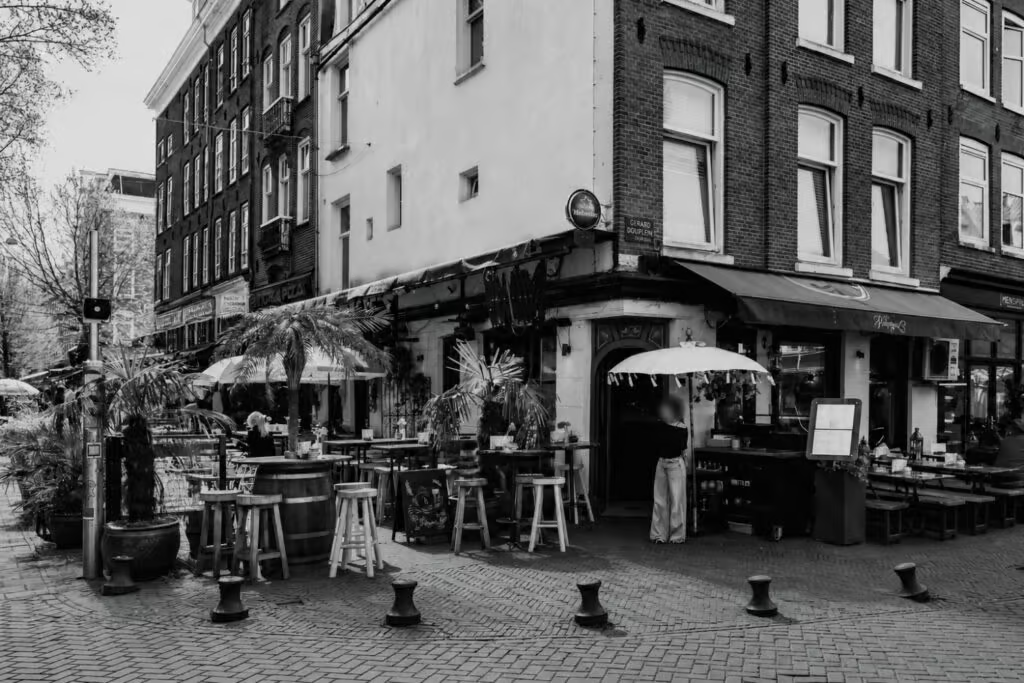
De Pijp is a dense, lively Amsterdam neighbourhood south of the canal belt, known
for its Albert Cuypmarkt, multicultural character, and concentration of international
residents, making it one of the most sought-after areas for expat buyers in the city.
If you have been in Amsterdam for more than a few weeks, you have probably spent
time in De Pijp. The Albert Cuypmarkt on a Saturday morning. A café on Van
Woustraat. The long, wide streets lined with red-brick apartment buildings. It feels
lived-in, international, and alive. It is also one of the most competitive places to buy
an apartment in the city, especially for expats arriving with a relocation deadline.
What De Pijp Looks Like for Buyers in 2026
De Pijp is not a secret. It has been one of Amsterdam’s most desirable residential areas for over a decade, and prices reflect that. For buyers, De Pijp in 2026 is still one of Amsterdam’s most competitive urban markets. Apartments under 80 m² are moving quickly, especially when they are well-located, efficiently laid out and priced realistically. Most transactions sit roughly between €8,500 and €11,500 per m², with smaller apartments often pushing higher because the entry price remains attractive to starters, expats and young professionals.
Overbidding is still part of the game, but not without logic: the strongest results are reserved for homes that combine location, layout and presentation. De Pijp remains a high-demand neighbourhood, but buyers who understand the numbers can still make smart moves instead of emotional ones.
The stock is predominantly pre-war construction: tall, narrow buildings with high ceilings, original details and wooden pile foundations. The apartments are charming. They also require attention: foundation issues are more common in this stock than in post-war areas, and VvE maintenance levels vary enormously between buildings.
Mr. Broker knows De Pijp well and views properties in the neighbourhood every week. Before you bid, our team checks the building’s foundation status, VvE health and erfpacht terms. For expats this matters extra: erfpacht and VvE documents are in Dutch, and the financial impact often only becomes visible when you read the small print. See what we do for the full buying process.
The Streets That Matter
The southern end of De Pijp, just above the Amstelkanaal, tends to be quieter and slightly more residential, with streets nearby like de Maastraat, Rijnstraat and Scheldestraat (Rivierenbuurt) offering good value relative to the core. The northern core around Ferdinand Bolstraat, Ceintuurbaan and Van Woustraat is noisier but more central. The blocks immediately around the Albert Cuypmarkt are prime, and priced accordingly.
Eastside of De Pijp (east of Saenredamstraat) is a quieter sub-area that many buyers overlook. It has the same pre-war architecture at slightly lower prices per square metre than the western core. If your priority is space over address prestige, it is worth looking here.
What Expats Should Know Before Buying Here
De Pijp was largely developed around the late 19th and early 20th century, right around the time Amsterdam introduced its leasehold system in 1896. That is why the neighbourhood has a mixed land situation: some older buildings are still on freehold land, while many later developments are on municipal leasehold. For buyers, this makes the land status an essential part of the due diligence.
Always check which type of ground lease applies and when the next canon revision is due before placing a bid. We translate these terms into plain English for our clients so there are no surprises after signing.
Read our full guide to buying in Amsterdam as an expat for the complete process overview, or book a free intake to discuss whether De Pijp fits your budget and timeline.
Is De Pijp a good neighbourhood for expats who don't speak Dutch?
Yes. De Pijp has one of the highest concentrations of international residents in Amsterdam. Most cafés, shops, gyms and service providers operate in English, and a large share of the neighbourhood’s social life happens in English. Doctors, dentists and notaries with English-speaking practice are easy to find within walking distance.
Are there international schools near De Pijp?
The closest full international schools are the Amity International School Amsterdam in Amstelveen and the British School of Amsterdam in Oud-Zuid (closest) or the International French School d’Amsterdam. Both are reachable within 20 to 30 minutes from De Pijp by bike, tram or combination. Several bilingual primary schools sit closer, in De Pijp itself and in adjacent Rivierenbuurt.
How competitive is the bidding in De Pijp?
Very. Two-bedroom apartments in De Pijp consistently receive multiple bids and typically sell 5 to 15 percent above asking price. The competition has moderated slightly compared to 2023 and 2024, but it remains one of Amsterdam’s most contested markets. Mortgage pre-approval and a clear bid strategy are essential, especially when your mortgage is based on an expat contract or the 30% ruling.
Are most De Pijp apartments on erfpacht?
The neighbourhood has a mixed land situation. But way more private property then for example the Rivierenbuurt. Always check the ground lease terms for any specific property. Mr. Broker holds the MVA Erfpacht Deskundige (Specialist) certification and reviews these documents as standard practice for every property we assess, so you know exactly what canon you will pay and when it will be revised.
What is the public transport like in De Pijp?
Excellent. Tram connections to Centraal Station, the Zuidas and Amsterdam-Oost are frequent and fast. The neighbourhood is well served by public transport: tram lines 3, 4 and 24, and Amsterdam RAI station for Intercity connections. For expats working in the Zuidas (Amsterdam’s financial district, about 3 km south), De Pijp is one of the most practical locations to buy. For families, the Amity International School Amsterdam is roughly a 25-minute commute by bike and tram combined, which keeps De Pijp realistic as a base for expats with school-age children.
De Pijp is one of Amsterdam’s most rewarding places to live. Getting into the market here requires the right strategy. Talk to Mr. Broker and find out what is realistic for your budget.