
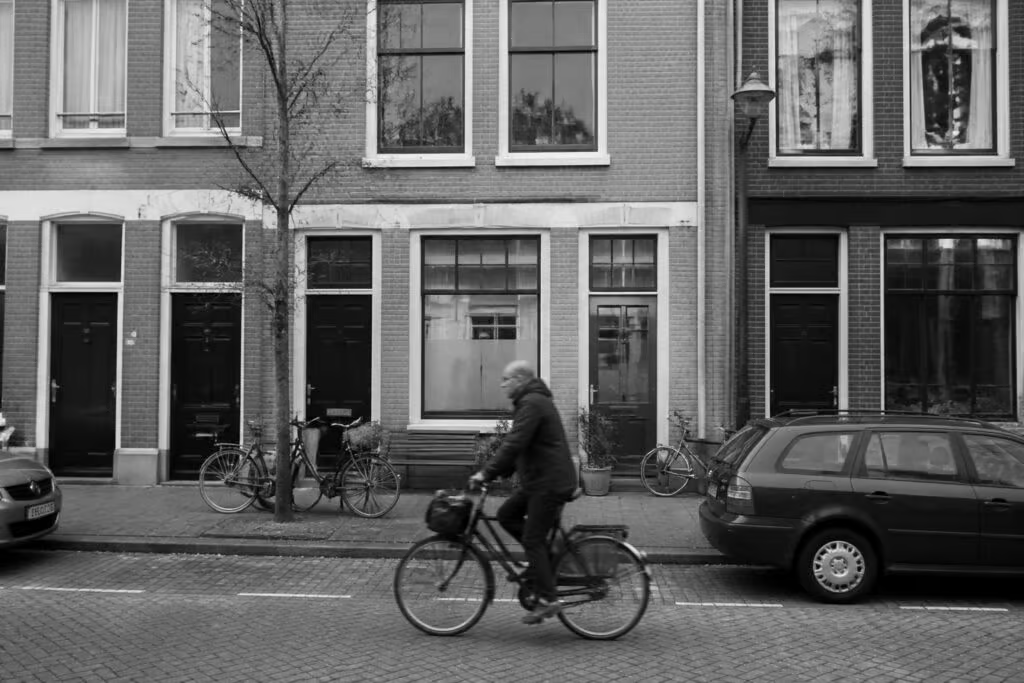
A cooling housing market refers to slowing price growth and longer selling times nationally, which in Amsterdam often means more negotiating room rather than genuinely lower prices.
The headlines warn of a slowdown. Buyer confidence is down, build costs are up, and political uncertainty hangs over new construction. So expats reasonably ask: does this mean Amsterdam finally gets cheaper? Usually not in the way people hope. A cooling national market and the Amsterdam market are two different things. Understanding the gap helps you make a calmer, smarter decision.
Cooling is not the same as falling
A cooling market means the pace eases: fewer bidding frenzies, homes on the market a little longer, buyers with slightly more leverage. It does not mean prices crash. Nationally, average prices were still up around 7% versus the 2022 peak, with a typical home near 466,000 euros. The current phase is a tussenfase, an in-between stage, not a correction. The market is catching its breath, not collapsing. For buyers, that is good news of a different kind: more room to think, not a fire sale.
Why Amsterdam behaves differently
Amsterdam runs on its own logic. Supply is structurally short, driven by high build costs, stikstof (nitrogen) rules that slow construction, long permit procedures, and limited space. Demand stays strong from international workers, families, and investors. When national price growth slows, Amsterdam tends to hold firmer than smaller regions because that scarcity does not ease. So a cool-down that drops prices in a quiet province may barely register in De Pijp or Oud-West. See how this plays out across neighbourhoods on the Mr. Broker homepage.
What it actually means for expat buyers
The real shift is leverage, not price. In a calmer market you get more time to view, more room to negotiate, and fewer ten-buyer bidding wars. That matters for expats who cannot fly over for every viewing or who need an English-speaking notary and a mortgage built on expat income. It is a better moment to buy carefully, not a moment to wait for a crash that may never come. Mr. Broker reads recent sale data per street, so your offer reflects real value, and we tell you when a home is overpriced and when to push.
Frequently asked questions about the cooling Amsterdam market
If the Dutch market is cooling, why are Amsterdam prices still high?
Because Amsterdam has a structural supply shortage that a national slowdown does not fix. High build costs, slow permits, and strong demand keep the capital firm even when smaller regions soften. Cooling changes the pace and your negotiating room far more than it changes Amsterdam price tags.
Should I wait for an Amsterdam price crash before buying?
Waiting for a crash is risky. Most analysts describe the current market as an in-between phase, not a correction. Amsterdam scarcity makes a sharp drop unlikely. If you have the budget and a reason to settle, a calmer market is a fine time to buy well, rather than a reason to gamble on prices falling.
As an expat, how do I judge whether an Amsterdam home is fairly priced?
Compare it to recent sale prices on the same street or block, not the asking price. That data is in Dutch and not always easy to read from abroad. Mr. Broker pulls recent comparable sales per neighbourhood and explains the value in English, so you bid on facts rather than on a listing photo and a gut feeling.
Does a cooling market mean less overbidding in Amsterdam?
Often, yes, a little. Calmer conditions mean fewer aggressive bidding wars and slightly more homes selling at or near asking. But popular Amsterdam neighbourhoods can still see competition. There is no magic percentage. The right offer depends on the specific home, the competition, and timing, which is exactly what we read for you.
Want to know what the cooling market means for the home you have your eye on? Reach out to Mr. Broker for a free intake. We will cut through the headlines and tell you what the Amsterdam numbers really say.